
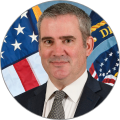
Robert Allan, MD
Chief of Pathology and Laboratory Medicine Service for the North Florida/South Georgia Veterans Health System
Clinical Professor of Pathology at the University of Florida in Gainesville
In pathology, the smallest details matter. A slight variation in tissue. A subtle abnormality beneath the microscope. Findings that can potentially lead to a diagnosis.
Coffee, surprisingly, is not all that different. Grind size. Water temperature. Extraction time. Tiny adjustments that work together to shape the final cup resting beside a morning newspaper or accompanying someone on their commute into work.
For Dr. Robert Allan, a member of the Florida Society of Pathologists, the connection between the two has proven to be a perfect fit.
A certified coffee barista, Dr. Allan has trained in everything from coffee bean selection and roasting to grinding, equipment and espresso preparation. He has even studied latte art, the delicate technique of pouring steamed milk into intricate patterns atop espresso drinks. Timing and precision must align in just the right way to bring designs to life. For the beginner, it may be the heart or the tulip. For the experienced, the swan can emerge from the foam.
Examples of Dr. Allan's latte art


When you think about it, there are parallels to pathology.
Both disciplines reward patience and observation. Consistency serves as currency. A respect for the details that others may not notice makes the difference.
Dr. Allan serves as Chief of Pathology and Laboratory Medicine Service for the North Florida/South Georgia Veterans Health System and as Clinical Professor of Pathology at the University of Florida in Gainesville. His work spans genitourinary pathology, hematopathology and flow cytometry, with an additional interest in non-neoplastic lung disease.
His interest in pathology began during his second year of medical school, when laboratory classes first introduced him to the intricate patterns hidden beneath the microscope.
“I was drawn to looking at abnormalities under the microscope and seeing how abnormal tissues still tried to somewhat recapitulate normal structures,” Dr. Allan said. “I spent a year between my second and third year of medical school doing a post-sophomore fellowship in pathology that cemented my interest in the field.”
That interest eventually evolved into leadership roles within FSP, where he became involved after attending meetings and later serving on the Executive Committee and as Education Committee chair, helping plan educational programming and annual meetings for colleagues across the state.
Ask Dr. Allan what he values most about pathology, and his answer quickly returns to collaboration and shared learning.
“I get to work in a great, stimulating environment with excellent colleagues while advancing our service,” he said. “We have a subspecialized service but we share cases readily. The VA has a diverse case mix and medical practice is focused on evidence-based, efficient, cost-effective care.”
Outside the laboratory, Dr. Allan’s interests stretch well beyond coffee. He enjoys spending time with his wife and son, traveling, astrophotography, bird watching, hiking, and college sports.
Dr. Allan has been heavily involved with College of American Pathologists initiatives in structural electronic reporting and informatics, and currently serves on the organization’s Cancer Committee. It is work that reflects his belief that pathology will continue playing an increasingly important role in guiding patient care.
“Pathologists need to better establish their role in choosing appropriate diagnostic and prognostic tests and managing information from anatomic and clinical pathology tests,” he said.
Whether in pathology or coffee, Dr. Allan knows small details can shape a much larger outcome.
FSP Member Login
Contact
Florida Society of Pathologists
c/o Compass Management & Consulting
12574 Flager Blvd. Suite 101
Jacksonville, FL 32258
Phone: (904) 309-6261
Email: contact@flpath.org



Interested in Advertising?
Contact:
Erin Corrales
Executive Director
904-309-6204
Email: exec@flpath.org